
For many first-time travellers, choosing between Uganda and Kenya seems simple. Kenya is famous for the Maasai Mara, dramatic savannah landscapes and the Great Migration. Uganda is known for mountain gorillas, chimpanzees, lush forests and a more varied, immersive style of travel.
The better choice depends less on which country is “best” and more on what you want your African journey to feel like.
Do you want classic savannah game drives and large concentrations of wildlife? Are you hoping to track gorillas in the forest? Do you prefer a destination with a broader mix of primates, mountains, lakes, cultural experiences and wildlife? Are you planning a shorter first safari, or a slower, more layered trip?
Uganda and Kenya can both deliver an exceptional African adventure, but they suit different priorities. This guide compares them across wildlife, landscapes, activities, seasons, travel planning and value so you can choose with confidence.
Uganda vs Kenya safari at a glance
| Travel priority | Uganda | Kenya |
|---|---|---|
| Signature experience | Gorilla trekking and primate encounters | Classic savannah safari and the Maasai Mara |
| Landscape | Forests, lakes, mountains, wetlands and savannah | Open plains, escarpments, savannah and coast |
| Best for | Travellers seeking variety and deeper nature experiences | First-time safari travellers seeking iconic wildlife scenes |
| Gorilla trekking | Available in Bwindi and Mgahinga | Not available |
| Great Migration | Not a core Uganda experience | One of Kenya’s defining attractions |
| Safari style | More diverse and often more exploratory | More traditional and wildlife-focused |
| Regional combinations | Can combine with Rwanda, Kenya or Tanzania | Can combine with Tanzania, Uganda or the coast |
| Main planning issue | Long road distances between regions | Popular parks and peak-season demand |
The important point is that neither country offers a complete substitute for the other. Kenya is especially strong for open-country wildlife viewing. Uganda is especially strong for combining safari with primate trekking, forest experiences and dramatic landscapes.
Why choose Uganda for your safari?
Uganda is often described as the Pearl of Africa, and its strongest advantage is variety. Within one journey, travellers can move from savannah plains to tropical forest, crater lakes, mountain foothills and fast-flowing rivers.
A Uganda safari may include:
- Game drives in Murchison Falls, Queen Elizabeth or Lake Mburo
- Gorilla trekking in Bwindi Impenetrable National Park or Mgahinga Gorilla National Park
- Chimpanzee tracking in Kibale Forest
- Boat cruises on the Nile or Kazinga Channel
- Mountain hiking and scenic highland journeys
- Birdwatching and community-based cultural experiences
This variety makes Uganda a strong fit for travellers who do not want a safari to be limited to sitting in a vehicle and looking across open plains.
Uganda’s biggest advantage: gorilla trekking
Uganda is one of the few countries where visitors can trek mountain gorillas in their natural habitat. Gorilla trekking takes place in Bwindi Impenetrable National Park and Mgahinga Gorilla National Park. UWA says treks may last between two and seven hours, depending on the movement of the gorilla group and forest conditions, while the actual observation time is limited to one hour for standard tracking.
Bwindi is home to roughly half of the world’s mountain gorilla population, and its trekking sectors include Buhoma, Ruhija, Rushaga and Nkuringo. Mgahinga offers a smaller-scale alternative in a dramatic Virunga mountain setting.
This is not simply another wildlife activity. Gorilla trekking is physically demanding, emotionally powerful and highly regulated. It also requires advance planning because permits are limited.
For current planning, travellers should verify permit prices and booking procedures directly with the Uganda Wildlife Authority or through a licensed operator. UWA’s published guidance states that foreign non-resident and rest-of-Africa gorilla permits are booked through licensed tour operators, and its current tariff guidance also sets limits on group size and viewing time.
Uganda is especially strong for primate travel
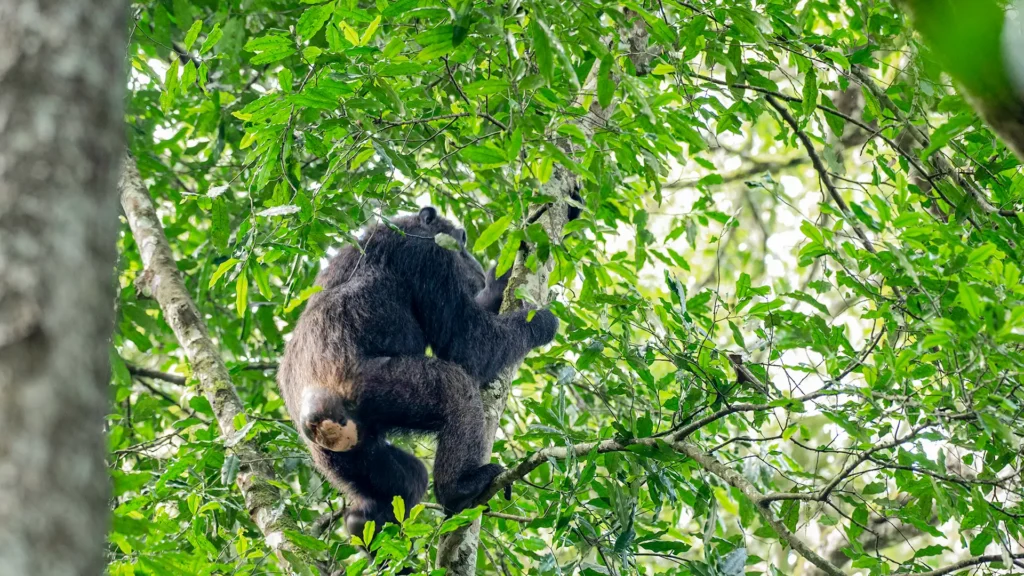
Kibale National Park is one of Uganda’s most important destinations for chimpanzee tracking. UWA describes Kibale as a major primate destination, with chimpanzee tracking and habituation experiences available throughout the year. The best conditions for tracking can vary because chimpanzees may move deeper into the forest during drier periods.
For travellers who are interested in great apes, Uganda offers something that Kenya generally cannot match in one country: the opportunity to combine gorilla trekking, chimpanzee tracking and classic savannah wildlife in a single itinerary.
Uganda offers more than wildlife
A Uganda itinerary can also include:
- A boat cruise beneath Murchison Falls
- Water-based wildlife viewing on the Nile
- Forest walks and canopy experiences
- Cultural encounters with local communities
- Scenic drives through the Albertine Rift
- Lake and mountain landscapes around western Uganda
Murchison Falls National Park, for example, combines game drives, a Nile boat cruise and access to forest and landscape experiences around the park.
Uganda is therefore a strong choice for travellers who want a multi-layered African journey, rather than a single-theme safari.
Why choose Kenya for your safari?
Kenya is one of Africa’s most established safari destinations, and it remains a powerful choice for travellers who want classic wildlife viewing in open landscapes.
Its most famous destinations include:
- Maasai Mara National Reserve
- Amboseli National Park
- Tsavo East and Tsavo West
- Samburu National Reserve
- Lake Nakuru and the Great Rift Valley
- Kenya’s Indian Ocean coast
Kenya’s strongest advantage: classic savannah wildlife
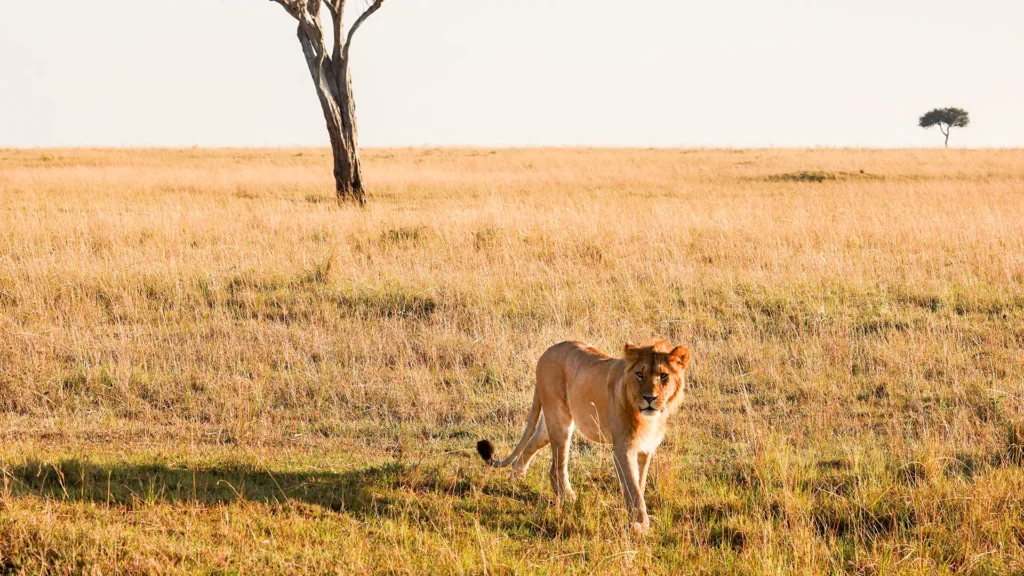
The Maasai Mara is especially attractive for first-time safari travellers because open grasslands can make wildlife easier to see. Lions, cheetahs, elephants, buffaloes, giraffes and large herds of plains game are among the species commonly associated with the Mara ecosystem.
The reserve also forms part of the wider Serengeti–Mara ecosystem, which is linked to the annual movement of wildebeest and zebra across northern Tanzania and southern Kenya. The timing of the migration varies each year, and river crossings cannot be guaranteed on a specific date. A responsible itinerary should therefore avoid promising an exact spectacle and should focus on spending enough time in the ecosystem to improve the chances of meaningful sightings.
Kenya is a strong option for a first safari
Kenya often works well for travellers who want:
- A shorter, more straightforward safari
- Open landscapes and frequent game-viewing opportunities
- A strong selection of safari camps and lodges
- Easy access to the coast after the safari
- A classic “big wildlife” experience
For visitors imagining wide plains, acacia trees, dramatic sunsets and herds moving across the horizon, Kenya often matches that image closely.
Kenya can also be highly diverse
Kenya is not only about the Maasai Mara. Amboseli is known for views towards Mount Kilimanjaro, while Samburu offers a very different dry-country landscape and wildlife profile. Travellers can also combine a safari with beach time in Diani, Watamu or Lamu.
This makes Kenya attractive for people who want a safari-and-coast holiday, especially when time is limited.
Uganda or Kenya: which has better wildlife?
The answer depends on the type of wildlife experience you want.
Choose Uganda if you want:
- Gorillas and chimpanzees
- Forest wildlife
- Primates and birdlife
- A mix of savannah, wetlands, mountains and tropical forest
- Fewer “standard safari only” days
Choose Kenya if you want:
- Large open plains
- Classic predator sightings
- A strong chance of seeing large herds
- The possibility of planning around the Great Migration
- A more traditional safari atmosphere
Uganda can provide excellent sightings of elephants, lions, buffaloes, giraffes and antelope, especially in destinations such as Murchison Falls, Queen Elizabeth and Lake Mburo. Kenya may be more immediately recognisable to first-time travellers because its wildlife is often viewed in expansive, open terrain.
The difference is not simply animal numbers. It is also how the landscape shapes the experience. Kenya often gives you broad visibility. Uganda often gives you greater ecological variety.
Which country is better for gorilla trekking?
Uganda is the clear choice between the two.
Kenya does not offer mountain gorilla trekking. Uganda offers it in Bwindi and Mgahinga, while neighbouring Rwanda and the Democratic Republic of Congo offer additional gorilla destinations in the wider Virunga region.
Uganda may be especially attractive to travellers who want to build a longer primate-focused trip around:
- Gorilla trekking
- Chimpanzee tracking
- Golden monkey experiences
- Forest birding
- Community visits
- Mountain and lake landscapes
The physical demands should not be underestimated. Gorilla trekking may involve steep, muddy and uneven terrain, so travellers should prepare for moderate to strenuous walking depending on the sector and gorilla group location.
Which safari is better for families?
Both countries can work well for families, but the right choice depends on the children’s ages and the type of trip you want.
Kenya may be easier for families seeking:
- Shorter safari circuits
- Traditional game drives
- Family-friendly camps
- A safari followed by a beach holiday
Uganda may be more rewarding for families with older children or teenagers who enjoy:
- Primates and conservation
- Forest walks
- Boat trips
- Cultural experiences
- More varied landscapes
Age restrictions apply to some primate activities. UWA’s current guidance lists a minimum age of 15 for gorilla tracking and 12 for chimpanzee tracking, subject to official rules and updates.
Families should always confirm activity requirements before booking.
Which destination offers better value?
Value depends on the complete itinerary, not just the headline price.
A safari budget includes:
- Park and activity fees
- Gorilla or chimpanzee permits, where applicable
- Transport
- Accommodation
- Guide services
- Domestic flights, if used
- Visa costs
- Travel insurance
- Meals and optional activities
Uganda can offer strong value for travellers who want several different experiences in one trip, especially when combining safari with primate activities and cultural experiences. However, gorilla permits are a major cost and should be budgeted separately from accommodation and transport.
Kenya can offer strong value for a shorter classic safari, particularly when staying in one or two parks and reducing internal transfers. However, popular areas can become expensive during peak periods.
When is the best time to visit Uganda or Kenya?
Uganda
Uganda can be visited throughout the year. Many travellers prefer the drier periods because roads and trekking conditions may be easier, but wet-season travel can bring greener landscapes, fewer visitors and potentially better value.
For gorilla trekking and chimpanzee experiences, conditions can vary by forest and season. UWA notes that chimpanzee tracking takes place year-round and that the best tracking conditions may not always align with the driest months.
Kenya
Kenya also offers year-round travel, but the best time depends on your objective.
- June to October: generally popular for dry-season wildlife viewing
- July to October: commonly associated with the Maasai Mara migration period
- January to March: often considered a strong period for wildlife viewing and lighter vegetation
- Rainy seasons: may bring greener scenery and lower rates, but can affect road conditions
The Great Migration is seasonal but not perfectly predictable. Travellers should plan around a period rather than a guaranteed event date.
Can you combine Uganda and Kenya in one trip?
Yes. Combining Uganda and Kenya can produce one of East Africa’s most varied travel experiences.
A possible route might include:
- Nairobi
- Maasai Mara
- Entebbe
- Kibale Forest
- Queen Elizabeth National Park
- Bwindi Impenetrable National Park
Another option is to combine Kenya’s savannah and coast with Uganda’s primates and forests.
However, multi-country travel requires careful planning around:
- Border crossings
- Flight schedules
- Visa requirements
- Permit availability
- Road transfer times
- Park opening schedules
- Travel insurance and health documentation
The East Africa Tourist Visa is designed for travel across Uganda, Kenya and Rwanda, and Uganda’s immigration authorities list it as a 90-day multiple-entry visa for movement within those three countries. Travellers should apply through the official immigration process and verify current entry requirements before departure.

Which one should you choose?
Choose Uganda if your dream trip includes gorillas, chimpanzees, forest trekking, varied landscapes and a more immersive mix of nature and culture.
Choose Kenya if you want classic savannah scenery, iconic wildlife viewing, the Maasai Mara or a safari combined with the coast.
Choose both if you have enough time and want a broader East African journey that combines open plains with forests, primates and mountain landscapes.
The strongest destination is the one that matches your priorities, physical comfort, available time and budget.
Plan your East African adventure with confidence
Choosing between Uganda and Kenya is only the first decision. The route, season, permits, transport, accommodation and pacing will shape the experience just as much as the destination itself.
Explore Africa Adventures can help you compare safari styles, understand your options and build a trip around what matters most to you whether that means gorilla trekking in Uganda, a classic Kenya safari, a family journey, a multi-country itinerary or a carefully balanced combination of wildlife, culture and scenery.
Start planning your African journey with free travel advice from Explore Africa Adventures.