
Most travelers arrive in East Africa dreaming of one unforgettable hour with mountain gorillas. Fewer realize that Uganda makes it possible and practical to pair that experience with high-success chimpanzee tracking in the same trip. The result is not a rushed checklist. It is a deeper, more varied encounter with Africa’s great apes that few other destinations can match at comparable cost and logistical ease.
In 2026, the timing, pricing, and conservation context make this combination especially compelling. Uganda currently holds roughly half of the world’s remaining mountain gorillas (part of a global population estimated around 1,063, with ongoing monitoring suggesting modest continued growth). Kibale National Park, often called the primate capital of East Africa, supports one of the highest chimpanzee densities on the continent and a success rate for sightings that regularly exceeds 90 percent.
This article lays out the practical realities permits, seasons, physical demands, and itinerary logic so you can decide whether the dual primate route fits your travel style and then plan it well.
Why Uganda Delivers Both Experiences Better Than Most Alternatives
Rwanda’s Volcanoes National Park remains an outstanding gorilla destination, but its single-country focus and higher permit price ($1,500 for non-residents) limit flexibility for many travelers. Uganda’s Bwindi Impenetrable National Park and Mgahinga Gorilla National Park offer the same species at a standard foreign non-resident permit of $800 (or $600 in the designated low-season months of April, May, and November). Chimpanzee tracking in Kibale sits at roughly $250 for a standard half-day permit.
The geographic logic is strong. Bwindi lies in the southwest; Kibale sits farther north and west near Fort Portal. A well-designed itinerary can link the two with a stop in Queen Elizabeth National Park for classic savannah game viewing, including the famous tree-climbing lions of the Ishasha sector. The road distances are manageable, and the variety of habitats dense montane forest, tropical rainforest, and open plains keeps each day distinct.
Conservation impact is direct. Permit fees fund park management, community revenue-sharing, and anti-poaching work. Uganda’s gorilla tourism revenue reached significant levels in the 2025/26 financial year, supporting both wildlife and the people who live beside the parks.
Understanding the Two Experiences
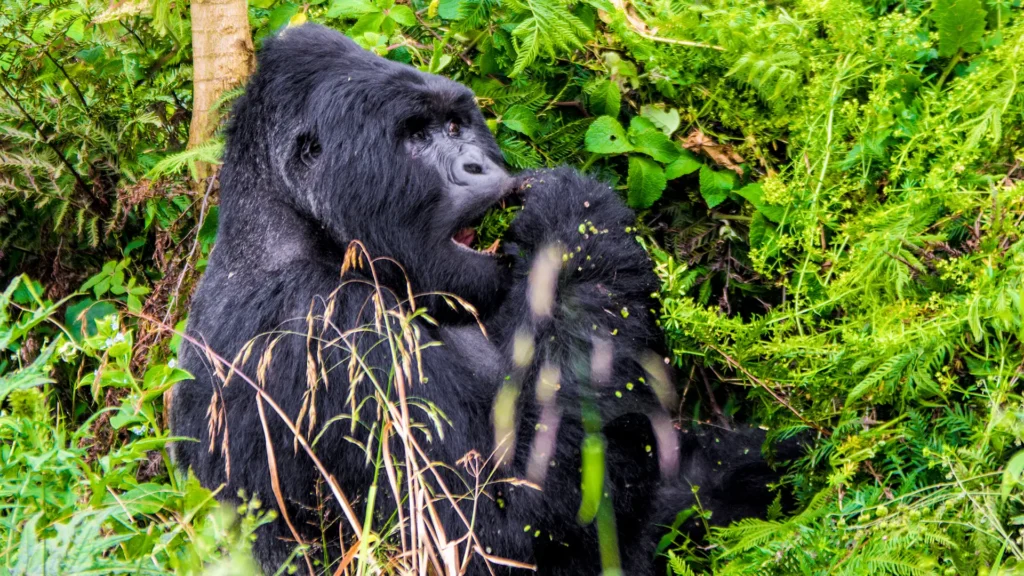
Mountain Gorilla Trekking in Bwindi or Mgahinga
You join a small group (maximum eight visitors) after a morning briefing. Trackers who have already located the family radio their position. The hike itself can last from under two hours to six or more, depending on the group’s location and the terrain. Once you reach the gorillas, you have one strictly timed hour to observe them at a respectful distance.
The physical demand varies. Some families range on steeper slopes; others stay lower. Dry-season trails are firmer; wet-season trails become slippery. Fitness matters more than age, but good hiking boots, a walking stick, and a positive attitude go a long way. The payoff is intimate: silverbacks resting, juveniles playing, mothers nursing behaviors that feel both wild and deeply familiar.
Chimpanzee Tracking in Kibale National Park
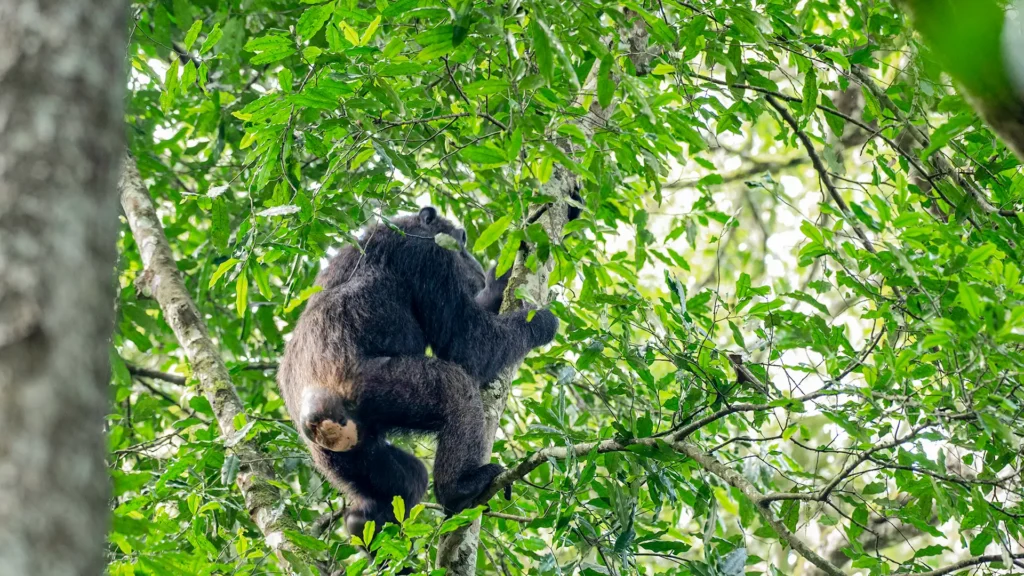
Kibale’s habituated communities offer a different energy. Chimpanzees are more vocal, more mobile, and often more numerous in a single encounter. Standard tracking lasts a few hours with one hour of observation once the group is found. A longer habituation experience is available for those who want extended time with the animals.
Sighting success is high because multiple communities are followed daily. You may also encounter several of the park’s other twelve primate species on the same walk. The forest feels alive with sound and movement in a way the quieter gorilla habitats rarely do.
Together the two experiences illustrate the range of great-ape social lives: the grounded, family-centered world of mountain gorillas and the fluid, noisy fission-fusion society of chimpanzees.
Best Time to Combine Both Treks in 2026
Uganda has two dry seasons and two rainy seasons. The long dry season (June–September) and the short dry season (December–February) generally offer the firmest trails and most reliable conditions for both activities. These months also coincide with peak demand, so permits sell out earlier.
The long rains (March–May) and short rains (October–November) bring muddier paths and more leeches, yet they deliver lush scenery, fewer visitors, and lower overall trip costs. Low-season gorilla permits at $600 make these windows particularly attractive for flexible travelers.
Chimpanzee tracking remains viable year-round. Many experienced guides note that fruiting seasons can concentrate chimps and improve viewing even during wetter months.
Practical Planning Notes for 2026
- Book permits early. Peak-season gorilla permits and popular chimpanzee slots require advance reservation, often three to six months or more. Full payment is now required at booking for gorilla permits.
- Fitness and gear. Expect uneven, sometimes steep terrain. Waterproof boots with good grip, long trousers, gloves for vegetation, rain protection, and insect repellent are essential.
- Health considerations. Yellow fever vaccination is required for entry. Malaria prophylaxis is recommended. Age limits and health declarations apply for trekking; operators can advise on specific rules.
- Itinerary length. A comfortable dual-primate circuit with game viewing typically runs 7–10 days. Shorter versions exist but compress travel and recovery time.
- Responsible conduct. Maintain required distances, keep noise low, and follow ranger instructions. Your presence funds protection; your behavior protects the animals.
How Explore Africa Adventures Approaches These Journeys
As a Uganda-based operator focused on authentic, carefully paced experiences, Explore Africa Adventures designs itineraries that respect both the animals and the traveler. Local knowledge of road conditions, lodge character, and current wildlife movements allows flexible routing between Kibale, Queen Elizabeth, and Bwindi. The emphasis remains on meaningful encounters rather than ticking boxes—exactly the approach these two primate experiences reward.
Whether you prefer a private journey, a small-group departure, or a combination that adds cultural time with Batwa communities or a beach extension, the dual-primate foundation provides a strong, commercially sensible core for 2026 travel.
Conclusion: One Country, Two Apes, Lasting Perspective
Gorilla and chimpanzee trekking in Uganda is not simply two activities on a list. It is a chance to witness the behavioral spectrum of our closest living relatives in landscapes that still function as intact ecosystems. The 2026 permit structure, improving conservation outcomes, and the practical ability to link the experiences make this one of the most coherent and rewarding primate journeys available in Africa.
If you are considering an East African safari that prioritizes depth over volume, start with the dual-primate route. Reach out to Explore Africa Adventures to discuss dates, fitness considerations, and the exact itinerary that matches your pace. The forests are waiting, and the permits are finite.
Plan deliberately. Travel respectfully. The hour you spend with each species will stay with you long after the trails are behind you.