When people imagine travelling through Africa, the first landscapes that usually come to mind are the great safari plains. They picture elephants crossing open grasslands, lions resting beneath acacia trees, giraffes moving across the horizon and safari vehicles waiting quietly as the sun begins to fall. Those images have become so closely associated with African travel that it can be easy to forget how much more varied the continent’s geography really is.
Across Africa, enormous freshwater lakes, volcanic lakes, wetlands and waterways have shaped landscapes and communities for generations. They support fishing communities, influence local food cultures, provide habitats for birds and wildlife, connect regions through transport and trade, and create landscapes that can feel completely different from the savannahs that dominate the conventional safari image. For travellers, these waters offer another way of experiencing Africa one that can combine wildlife with boating, birdwatching, cultural encounters, photography, relaxation and a slower appreciation of the landscape.
Some of these lakes already form an important part of established tourism destinations. Lake Victoria connects Uganda, Kenya and Tanzania across one of East Africa’s defining geographical features. Lake Kivu brings a striking lakeside dimension to Rwanda’s famous hills and mountain landscapes. Lake Tanganyika stretches across several countries along the western branch of the Great Rift Valley, while Botswana’s Okavango Delta demonstrates just how dramatically water can transform an otherwise dry African landscape. Kenya’s Rift Valley lakes, Zimbabwe’s Lake Kariba and Uganda’s network of lakes, rivers and wetlands add still more variations to the story.
Looking at Africa through its lakes therefore changes the question a traveller asks. Instead of asking only which national park to visit, it becomes possible to ask what kind of landscape, culture and experience you want to encounter. That shift opens up a much broader understanding of African travel.
Africa’s Lakes Are More Than Beautiful Scenery
A lake can look like a simple geographical feature when viewed from a distance, but the communities and ecosystems around it tell a much deeper story. Water determines where people settle, how they earn a living, what they eat and how they move, while wildlife depends on the same resource in ways that create some of Africa’s most productive ecosystems.
Lake Victoria illustrates this relationship particularly well. Shared by Uganda, Kenya and Tanzania, the lake occupies an important place in the geography and livelihoods of East Africa. Its waters support fishing communities and transport networks, while the surrounding islands, wetlands and shorelines create environments where human activity and nature remain closely connected. UNESCO’s documentation of the Lake Victoria region also highlights cultural heritage across the three countries, showing that the lake represents far more than a natural attraction.
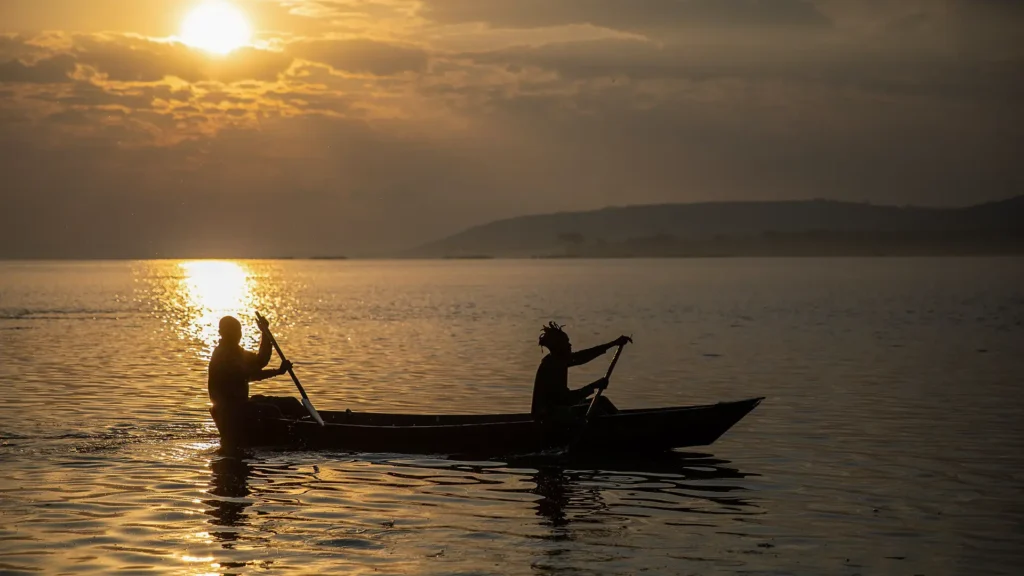
This relationship between water, people and landscape appears repeatedly across the continent. Lake Tanganyika, for example, stretches between Tanzania, the Democratic Republic of Congo, Burundi and Zambia and forms part of the Great Rift Valley system. Its exceptional depth, surrounding mountains and remarkable aquatic biodiversity give it a character very different from the open waters of Lake Victoria. A traveller who approaches such a destination only as a place to take photographs misses much of what makes it significant.
The same principle applies to smaller lakes. Their importance does not necessarily come from their size. A lake can become memorable because of the forest surrounding it, the communities living along its shoreline, the birds that gather there, the mountains reflected on its surface or the activities it makes possible. In many cases, the water becomes the thread connecting several parts of the travel experience.
That is what makes Africa’s lake destinations particularly interesting. They allow travellers to see how geography influences culture, wildlife and everyday life rather than experiencing each element separately.
Lake Victoria Reveals Another Side of East Africa
Lake Victoria is perhaps one of the clearest examples of how a major African lake can become part of a much wider travel story. Its scale is difficult to appreciate from a single viewpoint because its waters extend across three countries and influence landscapes far beyond its immediate shoreline.
In Uganda, the lake forms part of the country’s southern landscape and contributes to the character of places ranging from the Entebbe area to lakeside communities and islands. It also connects naturally with the country’s wider water systems. Uganda’s destination profile describes Lake Victoria as the country’s dominant lake and links it to the source of the White Nile, while the country’s geography includes other lakes, wetlands and waterways that contribute to its ecological diversity.
For travellers, this creates opportunities to experience Uganda differently. A journey does not have to move directly from the airport to a national park and then from one game drive to another. Time beside the lake can introduce a different pace, whether through boat experiences, birdwatching, lakeside exploration or simply observing communities whose lives remain closely connected to the water.
The Kenyan and Tanzanian shores tell different versions of the same broader story. Local traditions, fishing economies, landscapes and cultural identities change from one area to another, reminding visitors that a geographical feature can connect countries without making them identical.
That cross-border character also makes Lake Victoria particularly interesting in the context of African travel. It provides an example of how a natural feature can create connections that extend beyond national tourism brands. Uganda, Kenya and Tanzania each have their own attractions and travel identities, but the lake reminds travellers that these landscapes form part of a much larger East African geographical system.
Kenya’s Lakes Add Depth to a Country Famous for Safari
Kenya has built one of Africa’s strongest international tourism identities around wildlife. The Maasai Mara, Amboseli, Tsavo and other protected areas attract visitors who arrive specifically to experience the country’s extraordinary wildlife landscapes. Yet some of Kenya’s most interesting travel experiences emerge when the journey moves beyond the classic game-drive environment.
The Rift Valley provides an excellent example. Lakes such as Nakuru and Naivasha sit within landscapes where escarpments, grasslands, wetlands and wildlife interact. These environments create a different rhythm from the open plains of the Maasai Mara, even though they can form part of the same broader journey.
Lake Nakuru is particularly associated with birdlife and wildlife, while Lake Naivasha offers a quieter freshwater environment where travellers can experience the landscape from another perspective. The attraction is not simply that there is water. It is the way water changes what surrounds it. Birds gather around wetlands, wildlife moves towards water sources and vegetation creates habitats that differ from the drier landscapes elsewhere in the country.

This makes lakes particularly valuable additions to safari itineraries. After several days of early mornings and long game drives, a lakeside experience can introduce a different pace without taking the traveller completely away from nature. A boat excursion, nature walk or birdwatching session can become part of the safari story rather than an interruption to it.
For travellers who want more than a checklist of famous animals, that variety can make an itinerary feel more complete. Kenya’s lakes demonstrate that a safari destination does not have to be defined solely by the animals that live there. The landscape itself can become part of the experience.
Tanzania’s Western Lakes Offer a Different Kind of Wilderness
Tanzania’s international tourism image is strongly associated with the Serengeti, Ngorongoro, Mount Kilimanjaro and Zanzibar. These destinations attract travellers for very different reasons, but together they have helped create one of Africa’s most recognisable tourism brands.
Lake Tanganyika stretches along the country’s western boundary and creates an environment where water, forest and mountains come together. The landscape around the lake feels far removed from the open plains of the Serengeti, and that difference is precisely what makes it valuable.
The Gombe ecosystem provides a particularly powerful example. Its forests and mountains rise above the waters of Lake Tanganyika, creating habitat for chimpanzees and other wildlife while supporting communities whose lives connect closely with the surrounding environment. UNESCO’s description of the Gombe-Masito-Ugalla biosphere area highlights the relationship between biodiversity, communities and nature-based tourism in the region.
This kind of destination illustrates why African tourism does not need to make every place compete for the same type of visitor. A traveller who has already experienced the great plains of northern Tanzania can find something fundamentally different around Lake Tanganyika. The attraction becomes the combination of primates, forest, mountains, water and remoteness.
Rwanda’s Lake Kivu Changes the Rhythm of a Journey
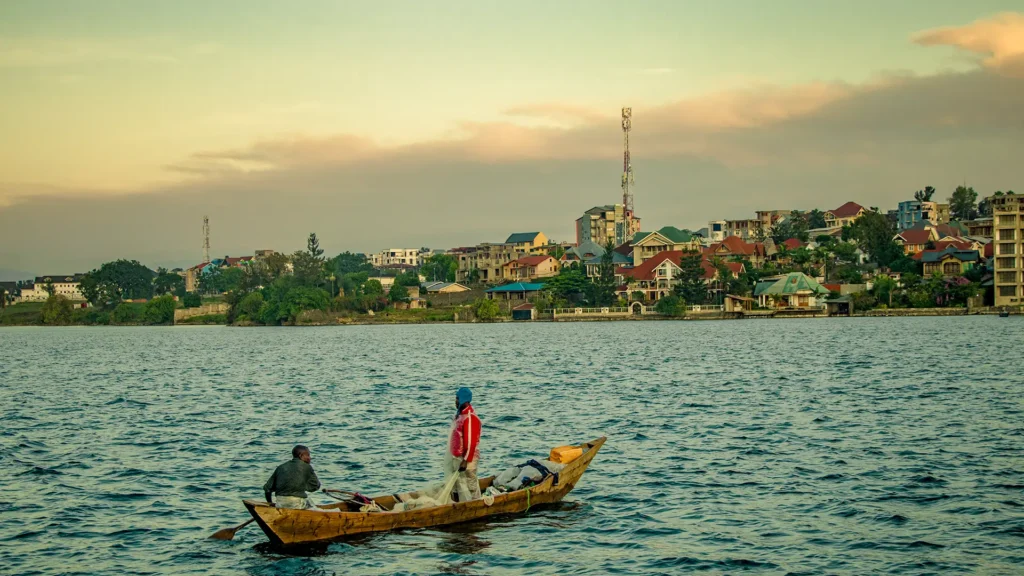
Rwanda is often introduced through its mountains, forests and mountain gorillas, and rightly so. The country’s compact geography allows travellers to move between major experiences without the enormous distances that characterise some other African journeys.
The lake lies along Rwanda’s western side, where steep green hills descend towards the water. The landscape is visually different from the dense forests of Volcanoes National Park and from the savannah environments found elsewhere in East Africa. That contrast makes it particularly useful for travellers who want to combine active experiences with time to slow down.
Imagine spending part of a journey trekking through mountain forest before moving towards the lake, where the pace changes and the landscape opens. Instead of following a wildlife trail at first light, the traveller can spend time on the shoreline, explore the surrounding communities or experience the lake from the water.
Good travel itineraries do not necessarily fill every hour with another attraction. They create changes in pace that allow travellers to absorb what they have already experienced. After an intense gorilla trek or a long day exploring Rwanda’s landscapes, a quieter lakeside environment can provide exactly that contrast.
Uganda Shows How Water and Wildlife Can Exist in the Same Journey
Uganda offers perhaps one of the clearest examples of how lakes and waterways can sit naturally alongside a wider wildlife journey. The country’s geography combines Lake Victoria, the Nile, crater lakes, wetlands, forest ecosystems and large national parks, creating an unusually varied landscape within a relatively compact destination. EAA’s own Uganda destination profile highlights this combination of lakes, rivers, forests, savannah and mountains as one of the country’s defining geographical characteristics.
Queen Elizabeth National Park demonstrates the relationship particularly well. The park combines savannah, wetlands, crater lakes and the Kazinga Channel, where water becomes central to the wildlife experience. EAA’s destination page highlights boat safaris along the channel, where hippos, crocodiles, elephants, buffaloes and water birds can be observed from the water.
Murchison Falls creates another variation. Here, the Nile is not simply part of the scenery; it is the force that defines the park’s most famous feature as the river passes through a narrow gorge before plunging over the falls. The surrounding landscape combines riverine environments, wetlands, savannah and forests, creating a destination where the river connects several different experiences.
This is one reason Uganda can work particularly well for travellers who want variety. A journey can move from rainforest to savannah, from mountain landscapes to lakes and rivers, without requiring the traveller to choose one type of African experience and abandon everything else.
In Southern Africa, Water Can Completely Transform the Safari
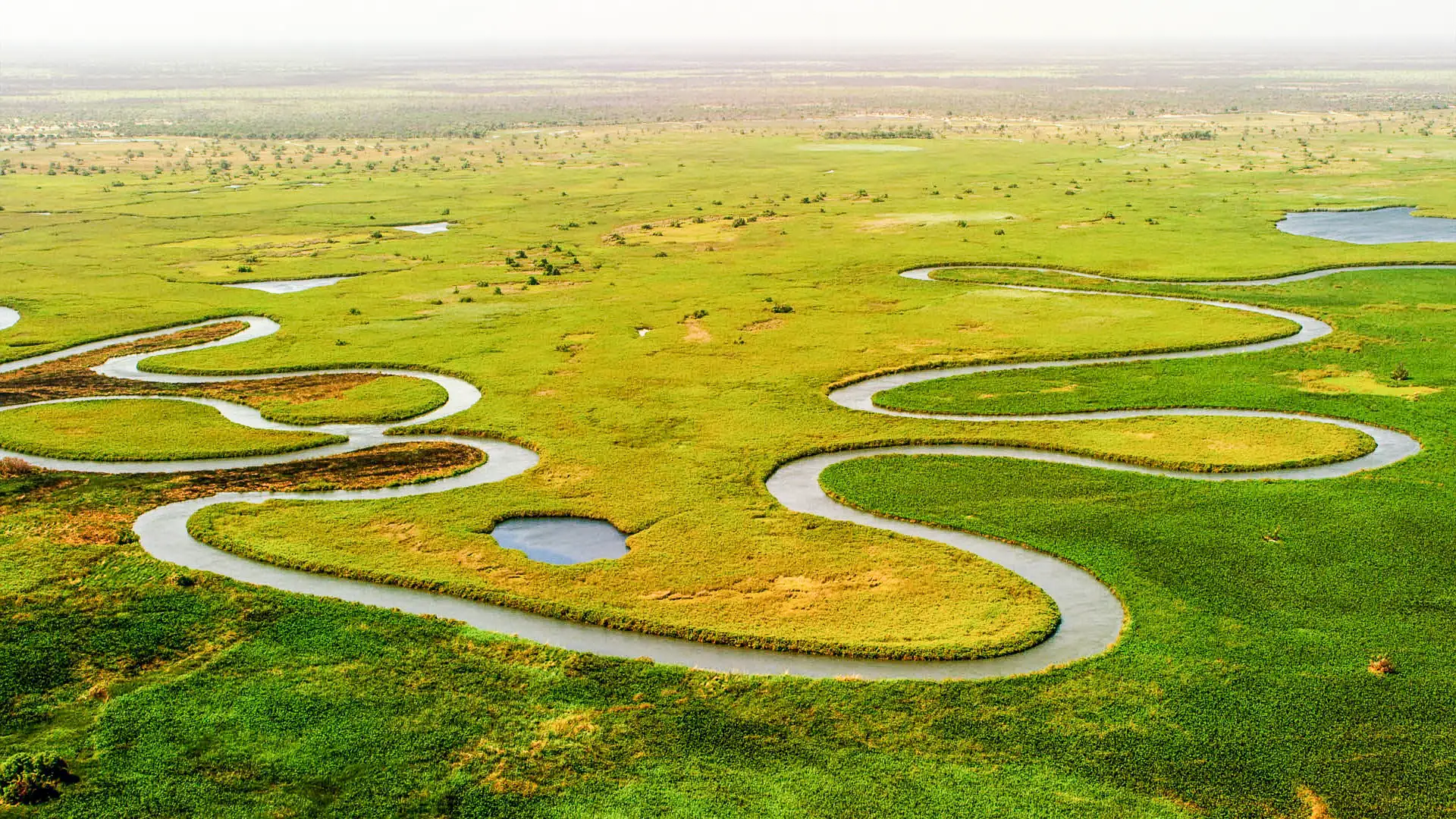
The Okavango Delta demonstrates what happens when water enters a landscape that might otherwise appear overwhelmingly dry. Seasonal flooding creates channels, islands, floodplains and habitats that attract extraordinary concentrations of wildlife. The resulting landscape feels completely different from the traditional image of a dry African savannah.
For visitors, the experience can change accordingly. Depending on the destination and seasonal conditions, travellers may explore waterways by mokoro or boat, move through channels or experience wildlife from a different perspective. The landscape itself determines how the safari unfolds.
Zimbabwe offers another interpretation through Lake Kariba, one of Africa’s great artificial lakes. Its waters create opportunities for boating, fishing and lakeside travel while adding another dimension to a country already known for Victoria Falls, wildlife and wilderness areas.
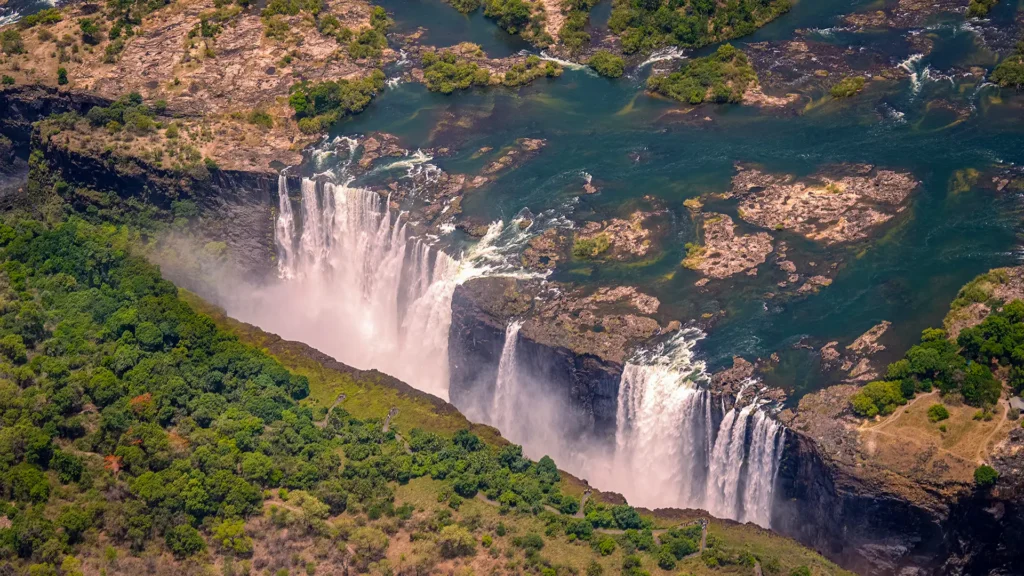
These destinations demonstrate an important point about African tourism. Water does not always mean relaxation, and safari does not always mean a vehicle moving across dry grassland. The two can overlap in ways that create entirely different experiences.
The Wildlife Story Changes When You Follow the Water
On a traditional game drive, the guide may spend time searching across open terrain for signs of movement. Around lakes, rivers and wetlands, the landscape often concentrates activity. Animals need water, birds gather around feeding grounds, hippos occupy channels and crocodiles wait along shorelines. The result can create a different kind of wildlife encounter in which the environment itself helps tell the story.
This does not mean lakes automatically offer better wildlife viewing than savannahs. Different ecosystems create different opportunities, and wildlife sightings always depend on season, weather, habitat and animal behaviour. What lakes offer is another perspective.
A boat safari, for example, changes the traveller’s position within the environment. Instead of looking across the landscape from a vehicle, the visitor moves through the same water system used by wildlife. At the Kazinga Channel in Uganda, that perspective can bring travellers close to hippos and crocodiles while allowing them to watch elephants and buffaloes gathering along the shoreline.
The experience becomes less about ticking animals off a list and more about understanding why those animals live where they do.
Lakes Create Space for Slower, More Personal Travel
Many safari itineraries begin early, involve long drives and pack several activities into a single day. That structure can create remarkable experiences, but it can also become physically demanding. Introducing a lakeside stay or water-based experience can give the traveller room to breathe without taking them away from the destination.
For couples, families, photographers and travellers taking longer journeys, that balance can be especially valuable. A morning boat trip followed by a relaxed afternoon beside the water can feel completely different from another full day on the road. A birdwatcher may find an entire morning rewarding without needing to travel far. A photographer may discover that changing light over the lake provides as much creative opportunity as a wildlife sighting.
This kind of slower travel also encourages travellers to pay attention to details that a fast-moving itinerary can overlook. The sound of fishing boats returning to shore, the changing colours of the water, local food prepared around the lake, birds moving across wetlands and communities going about their daily activities can all become part of the journey.
The Communities Around Africa’s Lakes Are Part of the Destination
Millions of Africans depend directly or indirectly on lakes and wetlands for livelihoods. Fishing, agriculture, transport, trade and tourism all intersect around these ecosystems. When travellers visit these places, they are therefore entering landscapes that function as homes and workplaces, not empty wilderness areas designed solely for tourism.
The strongest experiences allow local communities to participate meaningfully in tourism rather than simply becoming part of the scenery. Local guides, accommodation providers, food businesses, boat operators, artisans and cultural practitioners can all contribute to a tourism economy that keeps more value within the destination.
This approach also gives travellers a richer experience. Local knowledge can explain the significance of a particular fishing tradition, the history of a settlement, the seasonal behaviour of wildlife or the cultural meaning attached to the landscape.
For a company such as Explore Africa Adventures, that philosophy fits naturally with the wider idea of helping travellers experience Africa through its landscapes, people and wildlife rather than treating destinations as collections of attractions. EAA’s stated mission places local communities, trusted partnerships and meaningful connections among the principles behind its travel approach.
What a Lake-Centred African Journey Could Look Like
A traveller interested in East Africa could combine Uganda’s wildlife and rainforest experiences with time around Lake Victoria before continuing towards Kenya or Tanzania. Someone visiting Rwanda for gorilla trekking could extend the journey towards Lake Kivu and experience a completely different landscape without abandoning the country’s broader nature story.
Kenya offers another possibility by connecting its major safari destinations with the Rift Valley lakes, creating an itinerary that moves between wildlife, landscapes and water. Tanzania can combine its better-known northern attractions with very different environments farther west for travellers seeking a more remote experience.
In southern Africa, Botswana can place water at the heart of a safari through the Okavango Delta, while Zimbabwe can combine its famous waterfall landscapes with wildlife and Lake Kariba.