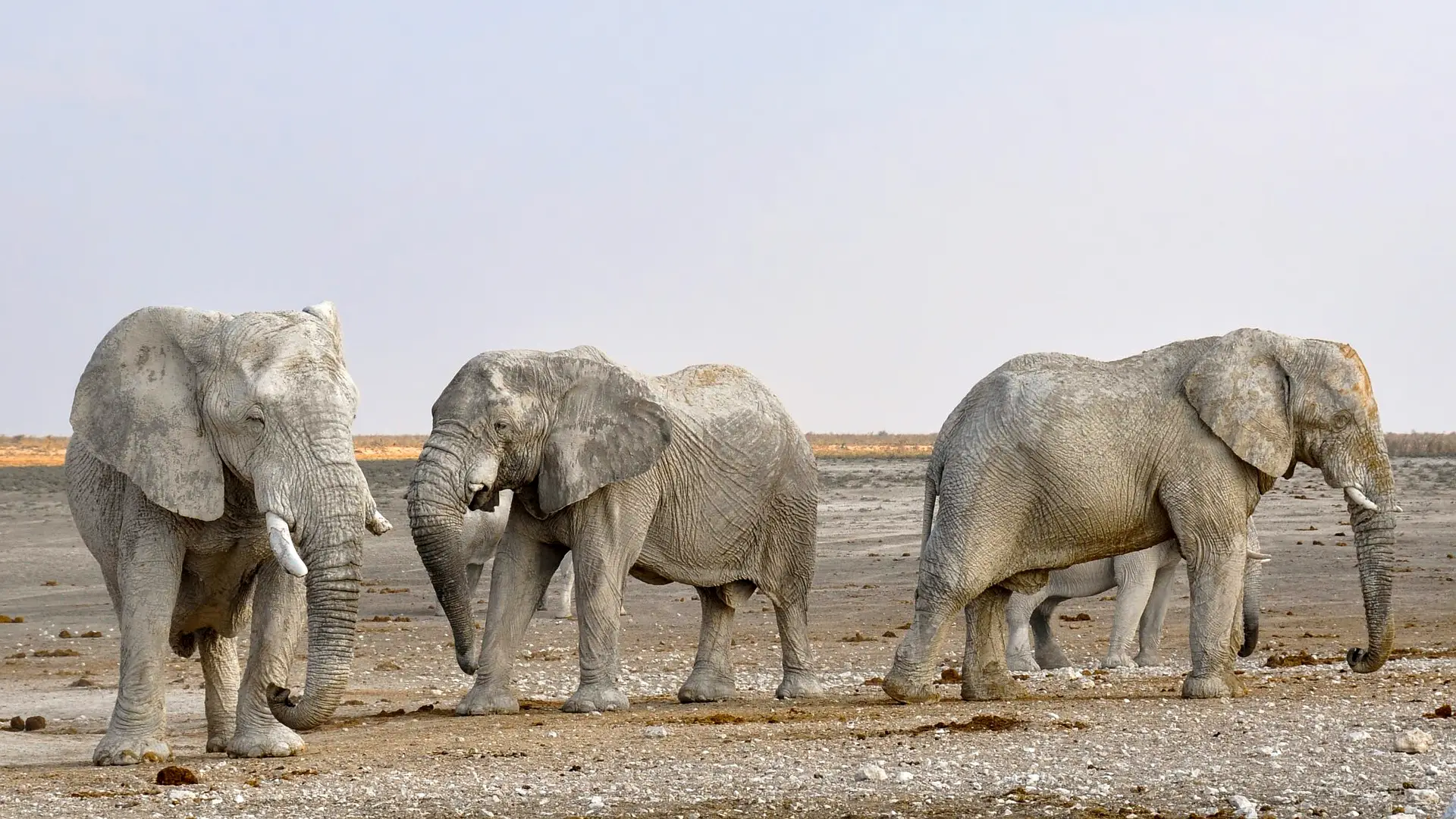
Tanzania boasts one of the most impressive networks of national parks in Africa. These protected areas conserve vast and varied ecosystems from the iconic Serengeti plains to the Ngorongoro Crater, Mount Kilimanjaro, and remote southern reserves. They protect exceptional wildlife, support local communities, and offer world-class safari and adventure experiences. This comprehensive guide explains all major national parks in Tanzania with detailed, informative content on location, landscapes, wildlife, best visiting times, activities, conservation, and practical tips.
Serengeti National Park
Serengeti National Park in northern Tanzania is a UNESCO World Heritage Site and one of the most celebrated wildlife destinations globally. Covering about 14,750 square kilometers, it forms the heart of the larger Serengeti ecosystem. The landscape features endless rolling plains, acacia savannahs, granite kopjes, and riverine forests. “Serengeti” means “endless plain” in the Maasai language.
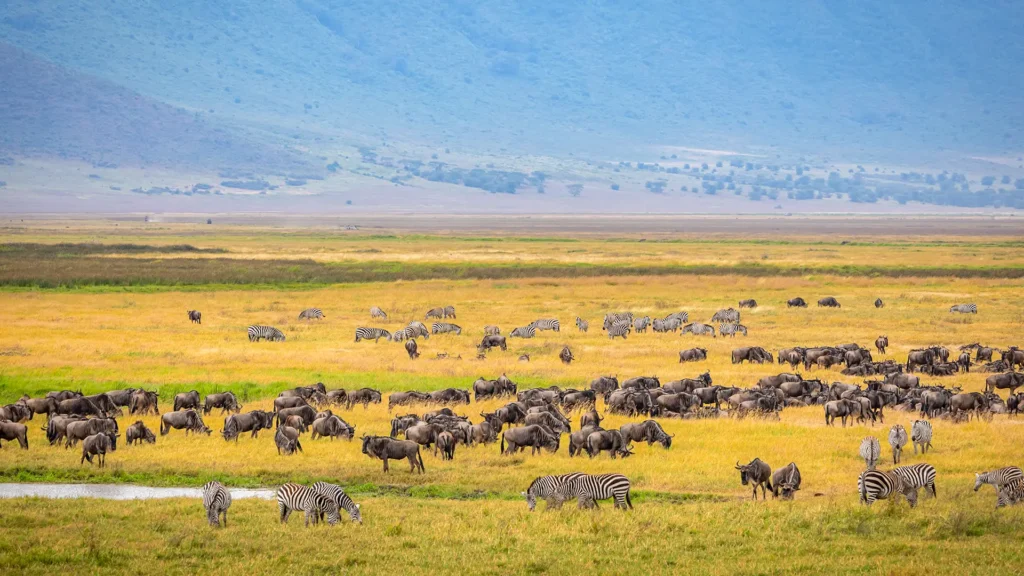
The park is famous for the Great Migration the largest terrestrial mammal migration on Earth, involving over 1.5 million wildebeest, 200,000 zebras, and thousands of gazelles. This annual cycle creates dramatic river crossings and predator action. The Serengeti supports one of the highest concentrations of large predators in Africa, including lions, leopards, cheetahs, and hyenas. Elephants, buffaloes, giraffes, and over 500 bird species are also present.
Best visiting times align with the migration: December–March for calving on the southern plains, June–October for northern river crossings. Dry seasons generally provide excellent visibility and game viewing.
Activities include game drives, hot air balloon safaris at sunrise, guided walking safaris, and visits to Maasai villages.
The park and surrounding areas protect a vast ecosystem through anti-poaching, community conservancies, and international support. Challenges include habitat pressure and poaching, but strong management keeps it thriving.
Stay 3–4 nights minimum. Book in advance during peak seasons. Combine with Ngorongoro Crater. Pack binoculars, neutral clothing, and malaria prophylaxis.
Ngorongoro Conservation Area
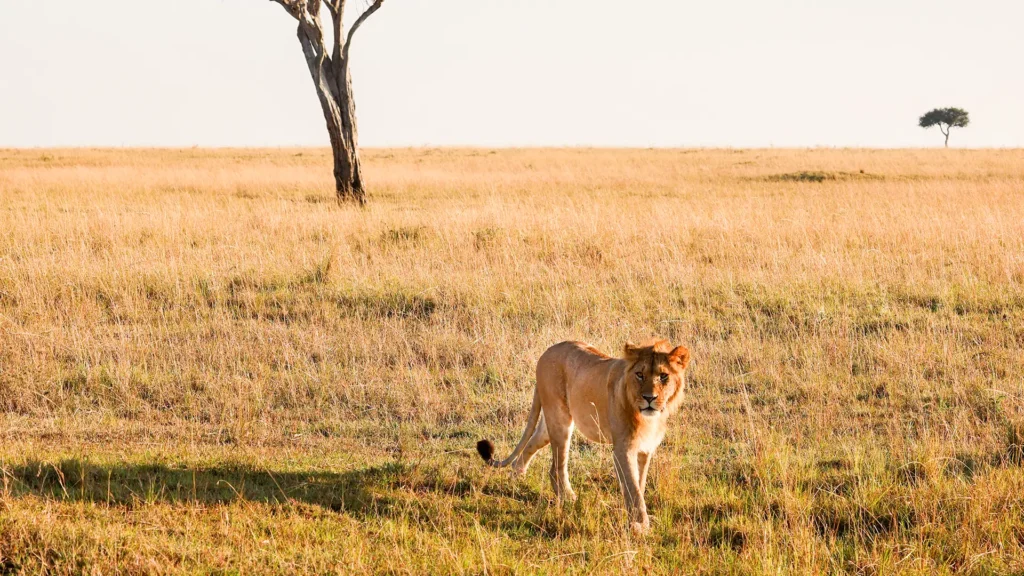
The Ngorongoro Conservation Area, adjacent to the Serengeti, is a UNESCO World Heritage Site. The highlight is the Ngorongoro Crater a massive caldera approximately 19 km wide and 600 meters deep. The landscape includes the crater floor with grasslands, swamps, and forests on the rims. It is one of the most densely populated wildlife areas in the world.
The crater supports the Big Five, with excellent black rhino sightings, large lion prides, elephants, buffaloes, and flamingos in the lake. The surrounding highlands offer cultural experiences with the Maasai.
Best time is year-round, but dry seasons offer better visibility. Activities include game drives into the crater and rim walks.
Tarangire National Park
Tarangire National Park is located in northern Tanzania, about 120 kilometers southwest of Arusha. It covers approximately 2,850 square kilometers and is famous for its ancient baobab trees and the Tarangire River, which is a vital water source during the dry season. The landscape features open acacia savannahs, dense woodlands, riverine forests, and swamps. The park is part of the larger Tarangire ecosystem and serves as a critical dry-season refuge for wildlife migrating from the Serengeti and Ngorongoro areas.
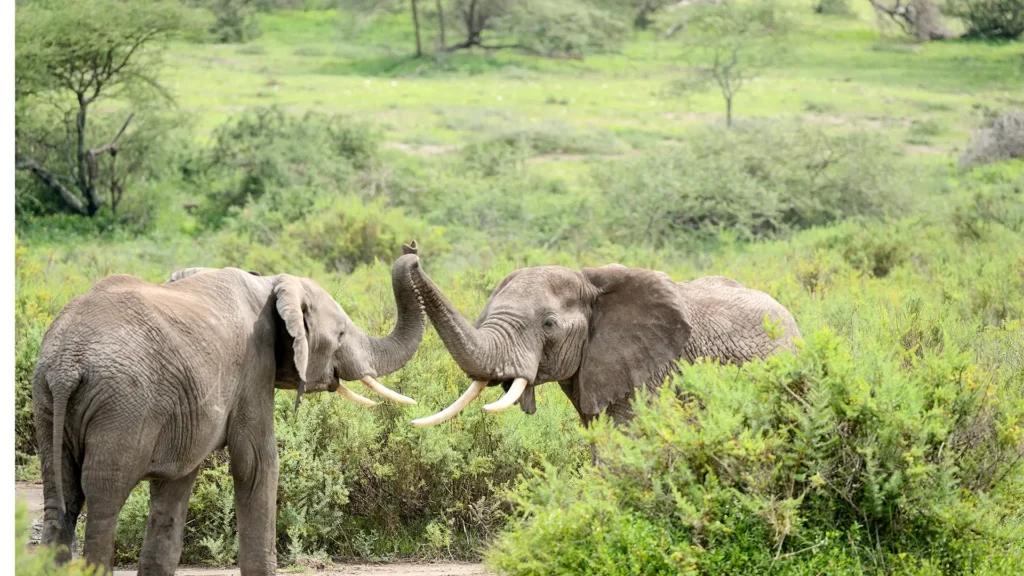
Tarangire has one of the highest concentrations of elephants in Tanzania, with herds often numbering hundreds. It is also excellent for seeing large herds of buffaloes, zebras, giraffes, impalas, and the rare fringe-eared oryx. Predators such as lions, leopards, and cheetahs are present, though sightings depend on the season. Birdlife is rich, with over 550 species recorded, including many raptors and waterbirds along the river.
The best time to visit is the dry season from June to October, when animals concentrate along the Tarangire River, making wildlife viewing outstanding. The wet season (November to May) brings green landscapes and fewer visitors but disperses the animals.
Activities include game drives (morning and afternoon), walking safaris with armed rangers, night drives in some areas, and cultural visits to local communities. Many visitors combine Tarangire with Lake Manyara or Ngorongoro for a varied northern circuit.
Tarangire plays a key role in protecting elephant migration routes and maintaining connectivity between protected areas. Community-based conservation initiatives around the park help reduce poaching and human-wildlife conflict by providing alternative income through tourism. The park faces challenges from agricultural expansion and water competition, but KWS and private operators are working on sustainable solutions.
The park is easily accessible from Arusha. Lodges and tented camps range from luxury to mid-range. A stay of 2–3 nights is recommended to fully explore the park’s different habitats. Pack binoculars for birdwatching and game viewing. Malaria prophylaxis is advised, and 4×4 vehicles are essential during wet periods. Tarangire is an excellent choice for travelers seeking a less crowded alternative to the Serengeti while still experiencing abundant wildlife.
Lake Manyara National Park
Lake Manyara National Park lies in the northern Rift Valley, about 130 kilometers from Arusha. It covers 330 square kilometers, with two-thirds consisting of the alkaline Lake Manyara itself. The landscape is exceptionally diverse for its size, including groundwater forests, acacia woodlands, open grasslands, and the lake shoreline. The park is famous for its tree-climbing lions and large flocks of flamingos.
Wildlife includes elephants, buffaloes, giraffes, hippos, and a variety of monkeys. The tree-climbing lions are a special attraction, though sightings are not guaranteed. The lake supports thousands of flamingos and other waterbirds during favorable conditions.
Best time to visit is the dry season (June–October) for better game viewing and flamingo concentrations. Activities include game drives, canoe safaris on the lake (when water levels allow), and walking in the forest.
The park protects an important Rift Valley ecosystem and serves as a migratory stopover for birds. It faces threats from fluctuating lake levels due to climate change and upstream water use. Efforts focus on sustainable tourism and habitat protection.
Selous Game Reserve (Nyerere National Park)
Selous Game Reserve, now largely incorporated into Nyerere National Park, is one of Africa’s largest protected areas, covering over 50,000 square kilometers in southern Tanzania. It is a UNESCO World Heritage Site and remains one of the most pristine wilderness regions on the continent. The landscape is dominated by miombo woodlands, open grasslands, river systems (especially the Rufiji River), and scattered lakes. The vast scale creates a true sense of untouched Africa.
The reserve supports huge populations of elephants, buffaloes, lions, leopards, wild dogs, and hippos. It is one of the best places in Africa to see African wild dogs. The Rufiji River and its tributaries are home to large crocodiles and abundant birdlife.
Best time to visit is the dry season (June to October), when animals concentrate near water sources. Activities include game drives, boat safaris on the Rufiji River, walking safaris, and fly-camping for an immersive experience.
Selous is critical for protecting large mammal populations and maintaining ecological processes in southern Tanzania. It faces challenges from poaching (especially for elephants) and proposed infrastructure projects. Strict protection and community involvement are essential for its long-term survival.
Due to its size, visits are usually by fly-in safari. Luxury tented camps offer high-end experiences. A minimum stay of 3–4 nights is recommended.
Ruaha National Park
Ruaha National Park in southern Tanzania is the country’s largest national park, covering about 20,226 square kilometers. It features rugged miombo woodlands, baobab-dotted plains, and the Great Ruaha River. The park is known for its dramatic scenery and remote wilderness feel.
It has excellent predator populations, including large prides of lions and good numbers of leopards and wild dogs. Elephants, buffaloes, and kudu are common.
Best time is dry season (June–October). Activities include game drives and walking safaris.
Mount Kilimanjaro National Park
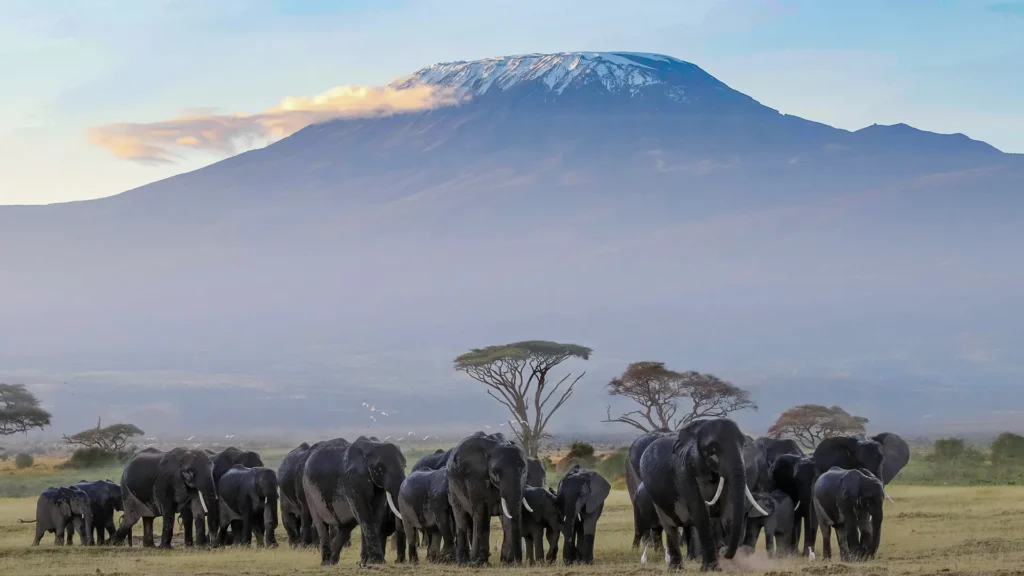
Mount Kilimanjaro National Park protects Africa’s highest mountain (5,895 meters) and covers approximately 1,688 square kilometers. Located in northern Tanzania near the Kenyan border, the park encompasses the entire mountain and its surrounding forests. The landscape is remarkably varied due to altitude: cultivated lower slopes, montane forest, heath and moorland, alpine desert, and finally the glacial summit with its iconic snow cap. The mountain is a stratovolcano with three peaks Kibo, Mawenzi, and Shira. It is a UNESCO World Heritage Site and one of the world’s most iconic natural landmarks.
Wildlife is concentrated in the lower and mid-altitude zones. Elephants, buffaloes, elands, duikers, and various primates (including blue monkeys and colobus) inhabit the forests. Higher up, the fauna is limited, but the park is important for endemic plants and birds such as the Kilimanjaro white-eye. The mountain’s glaciers are retreating due to climate change, making it a living laboratory for studying global warming impacts.
The best time to climb is during the dry seasons (January to March and June to October), when weather is more stable and summit success rates are higher. Non-climbers can enjoy forest walks and cultural visits to surrounding Chagga communities.
Activities include the famous summit climbs via routes like Machame, Marangu, and Lemosho (taking 5–9 days), day hikes in the lower zones, and nature trails. Many operators emphasize responsible climbing with proper acclimatization to prevent altitude sickness.
Conservation reasoning: The park protects a critical water catchment area that supplies rivers and supports millions of people in northern Tanzania and Kenya. It preserves unique high-altitude biodiversity and serves as a symbol of Tanzania’s natural heritage. Major challenges include climate change (glacier loss), tourism pressure on trails, and deforestation on the lower slopes. KWS works with local communities on sustainable tourism and reforestation programs. The mountain’s glaciers have lost over 80% of their volume since the early 20th century, highlighting the urgent need for global climate action.
Practical visitor information: Proper preparation is essential physical fitness, quality gear, and experienced guides/porters are mandatory. Many climbers stay in Arusha or Moshi before and after the trek. Park entry fees are charged per day. Altitude sickness can be serious, so acclimatization days are recommended. The park combines well with Serengeti or Ngorongoro for a complete Tanzania safari. For non-climbers, day trips or shorter hikes offer beautiful scenery without the full summit attempt.
Katavi National Park
Katavi National Park in western Tanzania is one of the country’s most remote and least visited parks, covering 4,471 square kilometers. It is known for its vast floodplains, miombo woodlands, and seasonal lakes that transform the landscape during the wet season. The park’s isolation gives it a true wilderness character that few other places in East Africa can match. The Katavi floodplain is one of the largest in Tanzania and supports massive herds of wildlife when flooded.
The park has very high densities of hippos and crocodiles in its rivers and lakes. It also supports large populations of elephants, buffaloes, lions, leopards, and antelopes. It is one of the best places in Tanzania to see large herds of roan and sable antelopes. Birdlife is exceptional during the wet season.
Best time to visit is the dry season (June to October), when animals concentrate around remaining water sources. Activities are mainly game drives and walking safaris. Due to remoteness, visits are usually by fly-in safari with mobile camps.
Katavi protects one of the last truly wild large ecosystems in East Africa and serves as a refuge for species that have disappeared from more accessible areas. Its remoteness helps protect it from some human pressures, but poaching and proposed infrastructure remain threats. Community involvement and tourism development are key to its future protection.
This park is for true wilderness lovers. Expect basic but authentic experiences. Combine with Mahale or Gombe for a western Tanzania adventure.
Gombe Stream National Park
Gombe Stream National Park, located on the western shore of Lake Tanganyika in western Tanzania, is a small but world-famous park covering only 52 square kilometers. It is best known for the long-term chimpanzee research started by Jane Goodall in 1960, which continues today. The landscape is rugged, with steep valleys, dense forests, and streams flowing into Lake Tanganyika. The park’s steep terrain and thick vegetation create a challenging but rewarding environment for primate observation.
Gombe is home to several habituated chimpanzee communities. Visitors can observe their complex social behaviors, tool use, and hunting. Other primates include baboons, red colobus monkeys, and blue monkeys. The park also has a variety of birds and small mammals. The lake itself offers opportunities for swimming and snorkeling.
The best time to visit is during the dry season (June to October), when trails are drier and chimpanzee sightings are more reliable. Activities include guided chimpanzee tracking (treks can be strenuous), forest walks, and boat trips on Lake Tanganyika.
Conservation reasoning: Gombe is a pioneering site for primate research and has provided invaluable insights into chimpanzee behavior, evolution, and conservation needs. It highlights the importance of long-term studies for understanding and protecting endangered species. Threats include habitat fragmentation outside the park and disease transmission from humans. Community development programs around the park help reduce pressure on resources and support local livelihoods.
Access is mainly by boat from Kigoma. Accommodation is limited to basic bandas or luxury tents. Visits usually last 2–4 days. Physical fitness is required for chimpanzee tracking, as terrain is steep. Combine with Mahale Mountains or Katavi for a western Tanzania primate and wilderness safari. Strict rules apply to minimize disturbance to chimpanzees.
Mahale Mountains National Park
Mahale Mountains National Park lies on the eastern shore of Lake Tanganyika, south of Gombe. It covers about 1,613 square kilometers and features the Mahale Mountains rising dramatically from the lake. The landscape includes lush montane forests, woodlands, and alpine bamboo zones. The park is remote and pristine, offering a true wilderness experience.
It is home to one of the largest remaining populations of eastern chimpanzees. Tracking these chimps is the main attraction. The park also supports a variety of other primates, birds, and small mammals. The crystal-clear waters of Lake Tanganyika provide excellent snorkeling and fishing opportunities.
Best time to visit is the dry season. Activities include chimpanzee tracking, forest hikes, and water-based activities.
Mahale protects a critical chimpanzee population and a unique montane ecosystem. Long-term research here complements studies at Gombe. The park’s remoteness is both a strength (less human pressure) and a challenge (difficult to monitor). Tourism revenue supports conservation and local communities.
Arusha National Park
Arusha National Park is located in northern Tanzania, just a short drive from Arusha town. Covering 552 square kilometers, it is one of the smallest but most scenic national parks in the country. The park features three distinct habitats: the Ngurdoto Crater, the Momella Lakes, and Mount Meru (4,562 meters). This diversity within a compact area makes it an excellent introduction to Tanzanian wildlife and landscapes. The park is often called “Little Serengeti” due to its open grasslands and wildlife.
Wildlife includes black and white colobus monkeys, giraffes, buffaloes, zebras, warthogs, and various antelopes. Although there are no lions, leopards are present. The Momella Lakes support flamingos and other waterbirds. Mount Meru offers excellent hiking opportunities with views of Kilimanjaro on clear days.
The park is accessible year-round. The dry season (June–October) is ideal for game viewing, while the wet season brings lush greenery.
Activities include game drives, canoe safaris on the lakes, walking safaris, and climbing Mount Meru (a 3–4 day trek). The park is perfect for half-day or full-day visits from Arusha.
Conservation reasoning: Arusha National Park serves as an important buffer zone around larger ecosystems and protects the slopes of Mount Meru, a critical water source. It is easily accessible, making it a gateway park that introduces many visitors to Tanzania’s conservation efforts. Challenges include urban pressure from nearby Arusha and balancing tourism with protection of fragile habitats.
Practical visitor information: Very accessible by road from Arusha. It is an excellent choice for travelers with limited time or those combining safari with Kilimanjaro climbs. Lodges and camps are available both inside and outside the park. Entry fees apply. A visit here is highly recommended as a starter or add-on to any northern Tanzania itinerary.
Saadani National Park
Saadani National Park is unique as Tanzania’s only coastal national park, located on the Indian Ocean coast north of Dar es Salaam. It covers about 1,062 square kilometers and combines terrestrial wildlife with marine ecosystems, including mangroves, beaches, and the Wami River. The park was established to protect a rare transition zone between savannah and coastal habitats.
Wildlife includes elephants, buffaloes, lions, leopards, and various antelopes. The Wami River supports hippos and crocodiles. Green turtles nest on the beaches, and the mangrove forests are important for marine life.
Best time to visit is during the dry season. Activities include game drives, boat safaris on the Wami River, walking safaris, and beach relaxation.
Saadani protects a rare ecosystem where land and sea meet, supporting both terrestrial and marine biodiversity. It also helps connect coastal forests with inland areas. Challenges include illegal logging, fishing pressure, and balancing tourism development with conservation.
Mikumi National Park
Mikumi National Park is located in eastern Tanzania, about 300 kilometers west of Dar es Salaam, and covers approximately 3,230 square kilometers. It forms part of the Selous-Mikumi ecosystem and is one of the most accessible parks from Dar es Salaam. The landscape is dominated by open savannah grasslands, miombo woodlands, and the Mkata Floodplain, which becomes a vast wetland during the rainy season. The park’s relatively flat terrain makes wildlife viewing straightforward.
Mikumi is known for its large populations of elephants, buffaloes, giraffes, zebras, and antelopes. Predators include lions, leopards, and wild dogs. The park also has a good variety of birds, especially during the wet season when the floodplains attract waterfowl.
The best time to visit is the dry season (June to October), when animals concentrate near water sources and the plains are easier to traverse. Activities include game drives, walking safaris in designated areas, and visits to the hippo pools.
Mikumi serves as an important buffer and corridor for the larger Selous ecosystem. It helps protect migratory routes for elephants and other species. Being close to major roads and Dar es Salaam makes it vulnerable to human pressures, but it also allows more Tanzanians to experience wildlife, raising national awareness for conservation. Challenges include poaching and road-related wildlife mortality.
The park is easily reached by road from Dar es Salaam (about 4–5 hours). It is ideal for shorter safaris or as an add-on to southern circuit itineraries. Lodges and camps range from basic to luxury. A 1–2 night stay is sufficient for most visitors. It offers good value for travelers seeking a reliable wildlife experience without the higher costs of the northern parks.
Udzungwa Mountains National Park
Udzungwa Mountains National Park is situated in south-central Tanzania and covers 1,990 square kilometers. It is part of the Eastern Arc Mountains, one of the world’s biodiversity hotspots. The landscape is rugged and forested, with steep slopes, waterfalls, and high plateaus. The park protects some of the oldest forests in Africa, with unique flora and fauna found nowhere else.
The park is famous for its primates, including the endemic Udzungwa red colobus and Sanje mangabey. Other wildlife includes elephants, buffaloes, and a rich variety of birds and reptiles. The park is more about biodiversity and hiking than traditional big-game viewing.
Best time to visit is the dry season for easier trekking. Activities include forest hikes to waterfalls, primate tracking, and multi-day camping treks.
The Udzungwa Mountains are a global priority for conservation due to their high endemism and ancient forests. The park protects critical watersheds and serves as a refuge for species threatened by deforestation elsewhere. Community involvement is key, as local people depend on the forests for resources.