MOUNTAINS OF THE MOON
Rwenzori Mountains National Park
Snow-capped peaks, giant lobelias and Africa’s highest non-volcanic range

Why Visit
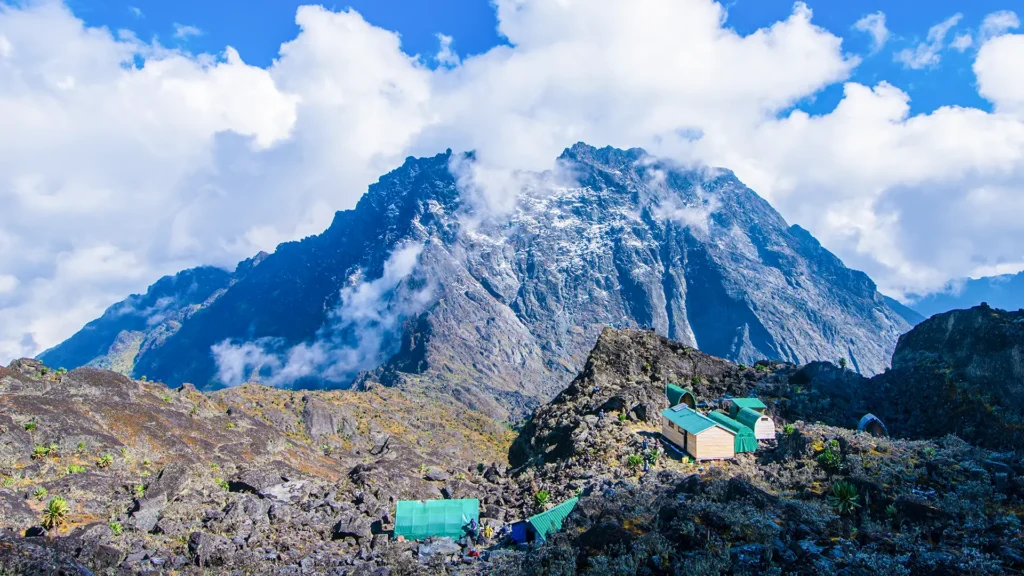
Established in 1991 and inscribed as a UNESCO World Heritage Site in 1994, Rwenzori Mountains National Park protects approximately 996 km² of the legendary Rwenzori range along Uganda’s western border with the Democratic Republic of Congo. The park encompasses Africa’s third-highest peak Margherita Peak (5,109 m) on Mount Stanley along with glaciers, alpine lakes, waterfalls and some of the richest montane flora on the continent.
Rising from the Albertine Rift, the mountains create a dramatic sequence of vegetation zones, from dense montane forest through bamboo and giant heather to surreal afro-alpine landscapes of giant lobelias and groundsels. The park supports around 70 mammal species and more than 217 bird species (including numerous Albertine Rift endemics), while its permanent glaciers and high peaks form one of the most important water catchments for the River Nile.
Snow-Capped Equatorial Peaks
Home to Margherita Peak (Africa’s third-highest summit) and five other major massifs, offering genuine high-altitude mountaineering in the heart of equatorial Africa.
Unique Afro-Alpine Flora
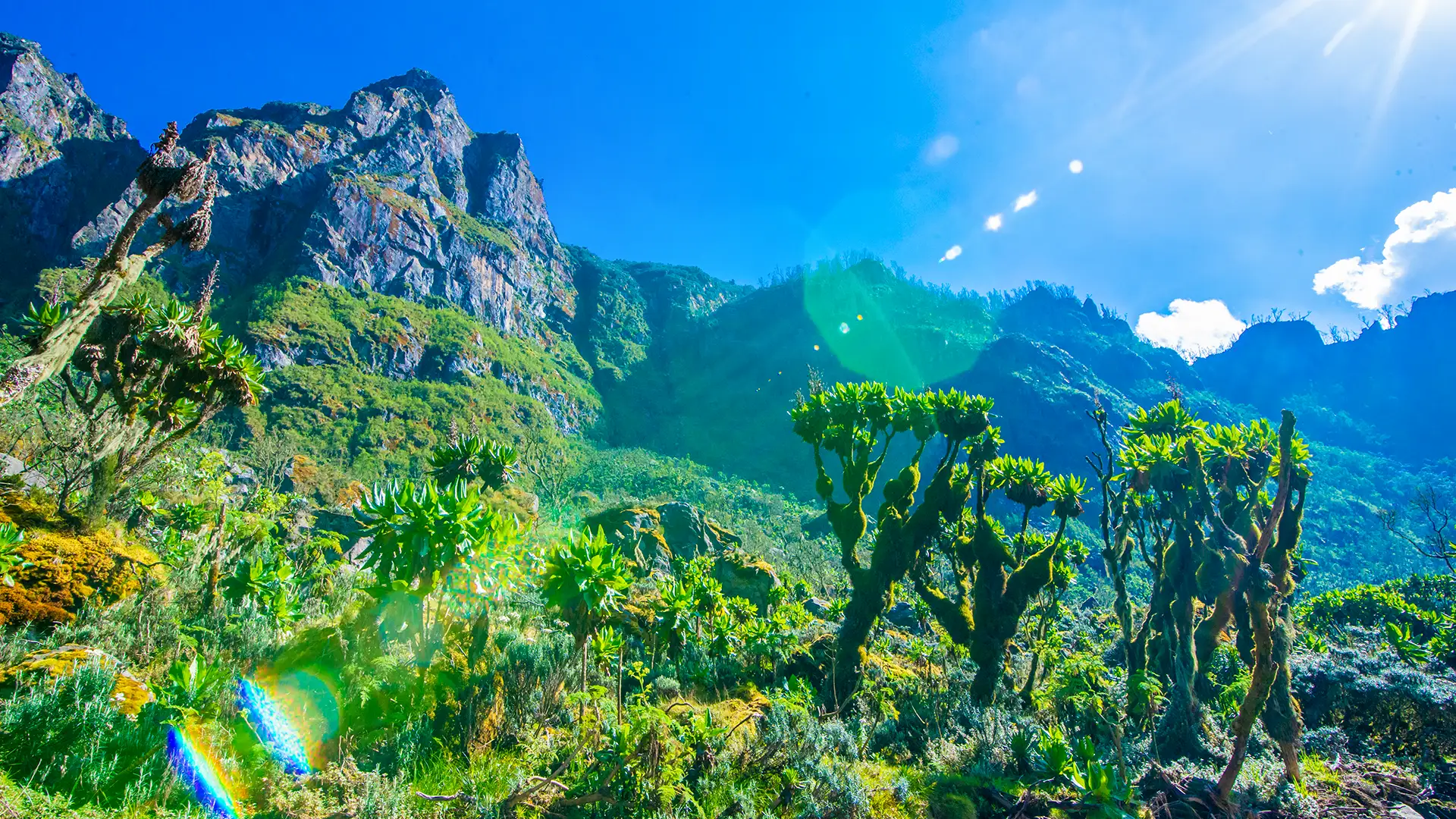
Giant lobelias, groundsels and heathers create otherworldly landscapes found nowhere else in this combination and scale.
World-Class Trekking
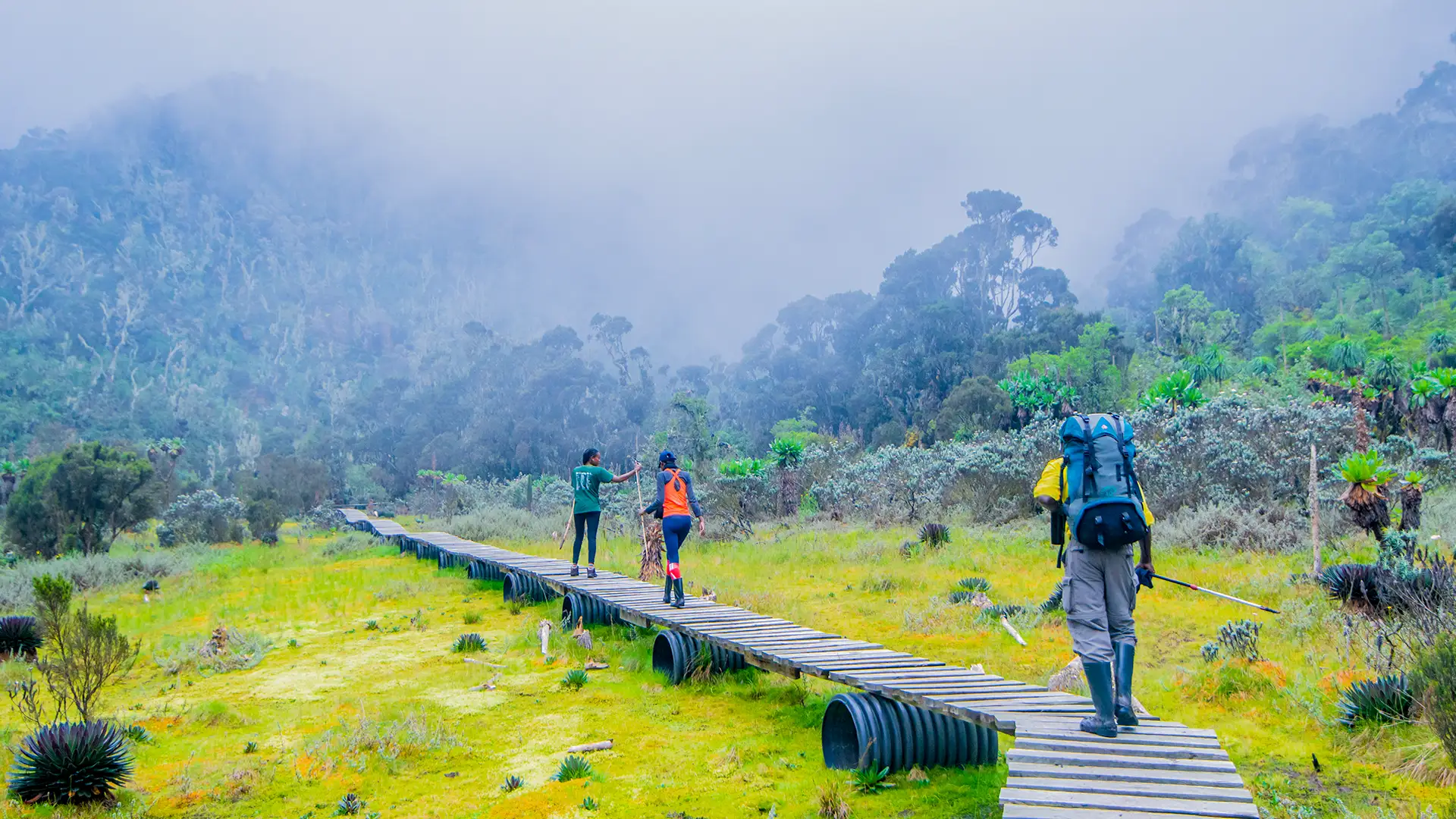
Multi-day circuits through five distinct vegetation zones, from rainforest to glaciers, ranked among Africa’s most spectacular and challenging mountain experiences.
Rich Endemic Biodiversity
Albertine Rift endemics including the Rwenzori turaco, three-horned chameleon and rare duikers, plus chimpanzees, forest elephants and over 200 bird species.
Top Things To Do
Multi-Day Mountain Trekking & Summit Attempts
Guided Nature Walks & Day Hikes
Bird Watching
Cultural Experiences with the Bakonzo
Iconic Wildlife